# lrp_toolbox
**Repository Path**: jiebaba666/lrp_toolbox
## Basic Information
- **Project Name**: lrp_toolbox
- **Description**: The LRP Toolbox provides simple and accessible stand-alone implementations of LRP for artificial neural networks supporting Matlab and Python. The Toolbox realizes LRP functionality for the Caffe Deep Learning Framework as an extension of Caffe source code published in 10/2015.
- **Primary Language**: Unknown
- **License**: Not specified
- **Default Branch**: master
- **Homepage**: None
- **GVP Project**: No
## Statistics
- **Stars**: 0
- **Forks**: 0
- **Created**: 2021-11-06
- **Last Updated**: 2021-11-06
## Categories & Tags
**Categories**: Uncategorized
**Tags**: None
## README
# The LRP Toolbox for Artificial Neural Networks (1.3.1)
The Layer-wise Relevance Propagation (LRP) algorithm explains a classifer's prediction
specific to a given data point by attributing
relevance scores to important components
of the input by using the topology of the learned model itself.
 The LRP Toolbox provides simple and accessible stand-alone implementations of LRP for artificial neural networks supporting Matlab and python. The Toolbox realizes LRP functionality for the Caffe Deep Learning Framework as an extension of Caffe source code published in 10/2015.
The implementations for Matlab and python are intended as a sandbox or playground to familiarize the user to the LRP algorithm and thus are implemented with readability and transparency in mind. Models and data can be imported and exported using raw text formats, Matlab's `.mat` files and the `.npy` format for python/numpy/cupy.
The LRP Toolbox provides simple and accessible stand-alone implementations of LRP for artificial neural networks supporting Matlab and python. The Toolbox realizes LRP functionality for the Caffe Deep Learning Framework as an extension of Caffe source code published in 10/2015.
The implementations for Matlab and python are intended as a sandbox or playground to familiarize the user to the LRP algorithm and thus are implemented with readability and transparency in mind. Models and data can be imported and exported using raw text formats, Matlab's `.mat` files and the `.npy` format for python/numpy/cupy.


 ### See the LRP Toolbox in Action
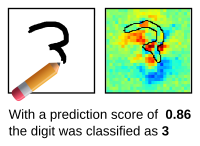
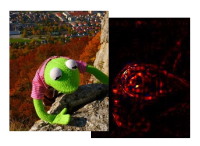
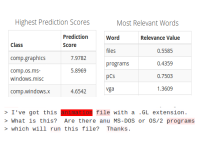
To try out either the python-based MNIST demo, or the Caffe based ImageNet demo in your browser, click on the respective panels:
| **MNIST** | **Images** | **Text** |
|:-----------:|:-------------:|:-----:|
| [
### See the LRP Toolbox in Action
To try out either the python-based MNIST demo, or the Caffe based ImageNet demo in your browser, click on the respective panels:
| **MNIST** | **Images** | **Text** |
|:-----------:|:-------------:|:-----:|
| [ ](https://lrpserver.hhi.fraunhofer.de/handwriting-classification) | [
 ](https://lrpserver.hhi.fraunhofer.de/image-classification) |[
 ](https://lrpserver.hhi.fraunhofer.de/text-classification) |
| A simple LRP demo based on neural networks that predict handwritten digits and were trained using the MNIST data set. | A more complex LRP demo based on a neural network implemented using Caffe. The neural network predicts the contents of the picture. | An LRP demo that explains classification on natural language. The neural network predicts the type of document. |
## Obtaining the LRP Toolbox
Clone or download it from github!
### Installing the Toolbox
After having obtained the toolbox code, data and models of choice, simply move into the subpackage folder of you choice -- matlab, python or caffe-master-lrp -- and execute the installation script (written for Ubuntu 14.04 or newer).
cd lrp_toolbox/$yourChoice
bash install.sh
Make sure to at least skim through the installation scripts! For more details and instructions please refer to [the manual](https://github.com/sebastian-lapuschkin/lrp_toolbox/blob/master/doc/manual/manual.pdf).
#### Attention Caffe-Users
We highly recommend building LRP for Caffe via the [singularity image definition](singularity/caffe-lrp-cpu-u16.04.def) (You might regret doing something else outside of Ubuntu 14.04 LTS or Ubuntu 16.04 LTS...).
In this case, we also recommend to *only* download the content of the [singularity](singularity) folder.
Call
cd /singularity
singularity build --fakeroot --force caffe-lrp-cpu-u16.04.sif caffe-lrp-cpu-u16.04.def
and the go have a coffee. The resulting caffe-lrp-cpu-u16.04.sif is an (executable) Singularity image which allows you to process LRP (and other methods) for Caffe Models with
[singularity run] ./caffe-lrp-cpu-u16.04.sif -c CONFIGPATH -f FILELISTPATH -p OUTPUTPATH
Have a look at [the manual](https://github.com/sebastian-lapuschkin/lrp_toolbox/blob/master/doc/manual/manual.pdf) for details.
## The LRP Toolbox Paper
When using (any part) of this toolbox, please cite [our paper](http://jmlr.org/papers/volume17/15-618/15-618.pdf)
@article{JMLR:v17:15-618,
author = {Sebastian Lapuschkin and Alexander Binder and Gr{{\'e}}goire Montavon and Klaus-Robert M{{{\"u}}}ller and Wojciech Samek},
title = {The LRP Toolbox for Artificial Neural Networks},
journal = {Journal of Machine Learning Research},
year = {2016},
volume = {17},
number = {114},
pages = {1-5},
url = {http://jmlr.org/papers/v17/15-618.html}
}
## Misc & Related
For further research and projects involving LRP, visit [heatmapping.org](http://heatmapping.org)
Also, consider paying https://github.com/albermax/innvestigate a visit! Next to LRP, iNNvestigate efficiently implements a hand full of additional DNN analysis methods and can boast with a >500-fold increase in computation speed when compared with our CPU-bound Caffe implementation!
## Updates and Version History
### New in 1.3.1:
#### Caffe implementation
* a slightly updated singularity image `.def`-file
* formula 11 now implements the vanilla backprop gradient
* formula 99 is now the only variant implementing Sensitivity Analysis
### New in 1.3.0:
#### Standalone Python implementation:
* update to python 3
* updated treatment of softmax and target class
* lrp_aware option for efficient calculation of multiple backward passes (at the cost of a more expensive forward pass)
* custom colormaps in render.py
* __gpu support__ when [cupy](https://github.com/cupy/cupy) is installed. this is an optional feature. without the cupy package, the python code will execute using the cpu/numpy.
#### Caffe implementation
* updated the installation config
* new [**recommended**](https://arxiv.org/abs/1910.09840) formula types 100, 102, 104
* support for Guided Backprop via formula type 166
* new python wrapper to use lrp in pycaffe
* pycaffe demo file
* bugfixes
* [singularity image definition](singularity/caffe-lrp-cpu-u16.04.def) for building a hassle-free OS-agnostic command line executable
### New in 1.2.0
#### The standalone implementations for python and Matlab:
* Convnets with Sum- and Maxpooling are now supported, including demo code.
* LRP-parameters can now be set for each layer individually
* w² and flat weight decomposition implemented.
#### Caffe:
* Minimal output versions implemented.
* Matthew Zeiler et al.'s Deconvolution, Karen Simonyan et al.'s Sensitivity Maps, and aspects of Grégoire Montavon et al.'s Deep Taylor Decomposition are implemented, alongside the flat weight decomposition for uniformly projecting relevance scores to a neuron's receptive field have been implemented.
#### Also:
* Various optimizations, refactoring, bits and pieces here and there.
](https://lrpserver.hhi.fraunhofer.de/text-classification) |
| A simple LRP demo based on neural networks that predict handwritten digits and were trained using the MNIST data set. | A more complex LRP demo based on a neural network implemented using Caffe. The neural network predicts the contents of the picture. | An LRP demo that explains classification on natural language. The neural network predicts the type of document. |
## Obtaining the LRP Toolbox
Clone or download it from github!
### Installing the Toolbox
After having obtained the toolbox code, data and models of choice, simply move into the subpackage folder of you choice -- matlab, python or caffe-master-lrp -- and execute the installation script (written for Ubuntu 14.04 or newer).
cd lrp_toolbox/$yourChoice
bash install.sh
Make sure to at least skim through the installation scripts! For more details and instructions please refer to [the manual](https://github.com/sebastian-lapuschkin/lrp_toolbox/blob/master/doc/manual/manual.pdf).
#### Attention Caffe-Users
We highly recommend building LRP for Caffe via the [singularity image definition](singularity/caffe-lrp-cpu-u16.04.def) (You might regret doing something else outside of Ubuntu 14.04 LTS or Ubuntu 16.04 LTS...).
In this case, we also recommend to *only* download the content of the [singularity](singularity) folder.
Call
cd /singularity
singularity build --fakeroot --force caffe-lrp-cpu-u16.04.sif caffe-lrp-cpu-u16.04.def
and the go have a coffee. The resulting caffe-lrp-cpu-u16.04.sif is an (executable) Singularity image which allows you to process LRP (and other methods) for Caffe Models with
[singularity run] ./caffe-lrp-cpu-u16.04.sif -c CONFIGPATH -f FILELISTPATH -p OUTPUTPATH
Have a look at [the manual](https://github.com/sebastian-lapuschkin/lrp_toolbox/blob/master/doc/manual/manual.pdf) for details.
## The LRP Toolbox Paper
When using (any part) of this toolbox, please cite [our paper](http://jmlr.org/papers/volume17/15-618/15-618.pdf)
@article{JMLR:v17:15-618,
author = {Sebastian Lapuschkin and Alexander Binder and Gr{{\'e}}goire Montavon and Klaus-Robert M{{{\"u}}}ller and Wojciech Samek},
title = {The LRP Toolbox for Artificial Neural Networks},
journal = {Journal of Machine Learning Research},
year = {2016},
volume = {17},
number = {114},
pages = {1-5},
url = {http://jmlr.org/papers/v17/15-618.html}
}
## Misc & Related
For further research and projects involving LRP, visit [heatmapping.org](http://heatmapping.org)
Also, consider paying https://github.com/albermax/innvestigate a visit! Next to LRP, iNNvestigate efficiently implements a hand full of additional DNN analysis methods and can boast with a >500-fold increase in computation speed when compared with our CPU-bound Caffe implementation!
## Updates and Version History
### New in 1.3.1:
#### Caffe implementation
* a slightly updated singularity image `.def`-file
* formula 11 now implements the vanilla backprop gradient
* formula 99 is now the only variant implementing Sensitivity Analysis
### New in 1.3.0:
#### Standalone Python implementation:
* update to python 3
* updated treatment of softmax and target class
* lrp_aware option for efficient calculation of multiple backward passes (at the cost of a more expensive forward pass)
* custom colormaps in render.py
* __gpu support__ when [cupy](https://github.com/cupy/cupy) is installed. this is an optional feature. without the cupy package, the python code will execute using the cpu/numpy.
#### Caffe implementation
* updated the installation config
* new [**recommended**](https://arxiv.org/abs/1910.09840) formula types 100, 102, 104
* support for Guided Backprop via formula type 166
* new python wrapper to use lrp in pycaffe
* pycaffe demo file
* bugfixes
* [singularity image definition](singularity/caffe-lrp-cpu-u16.04.def) for building a hassle-free OS-agnostic command line executable
### New in 1.2.0
#### The standalone implementations for python and Matlab:
* Convnets with Sum- and Maxpooling are now supported, including demo code.
* LRP-parameters can now be set for each layer individually
* w² and flat weight decomposition implemented.
#### Caffe:
* Minimal output versions implemented.
* Matthew Zeiler et al.'s Deconvolution, Karen Simonyan et al.'s Sensitivity Maps, and aspects of Grégoire Montavon et al.'s Deep Taylor Decomposition are implemented, alongside the flat weight decomposition for uniformly projecting relevance scores to a neuron's receptive field have been implemented.
#### Also:
* Various optimizations, refactoring, bits and pieces here and there.